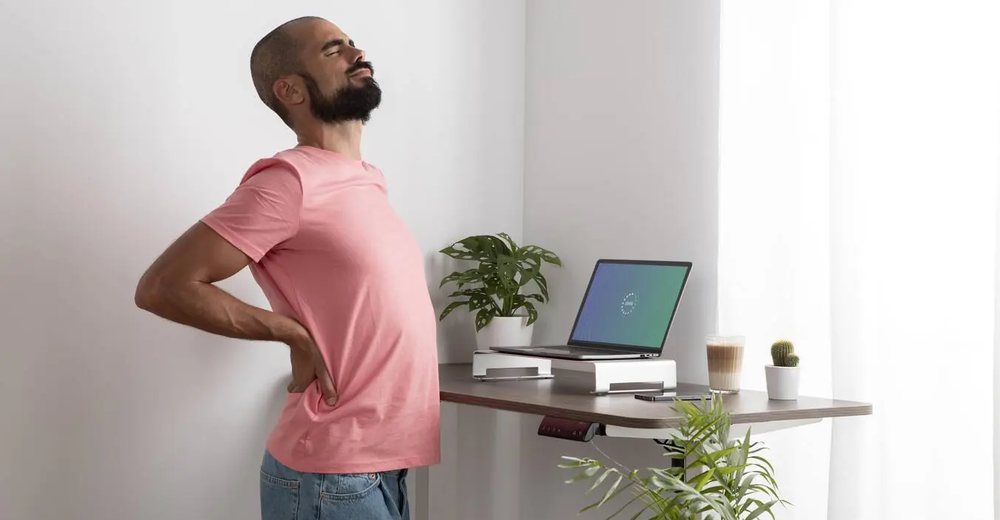
Sitting for long periods puts steady pressure on your spine and the muscles that support it. Over time, slouching, leaning toward a screen and staying still for hours can lead to back ache, neck tension and tight hips. The good news is that a few changes to your workspace and daily routine can make a real difference to how your body feels.
Set up your workspace
Place your screen at eye level and about an arm's length away, so you are not tipping your head forward. Keep your feet flat on the floor, your knees level with your hips and your lower back supported by your chair or a small cushion. Keep your keyboard and mouse close, with your elbows relaxed by your sides.
Move little and often
Your body loves movement. Stand up, stretch or walk around regularly, even for just a moment. Take phone calls standing, use the stairs and walk over to talk with colleagues instead of sending a message. Frequent short breaks are more helpful than one long break.
Stretch and strengthen
Gentle stretches for your neck, chest, hips and lower back release tension built up from sitting. Strengthening your core and the muscles around your hips and upper back helps you hold a comfortable posture naturally. A physiotherapist can show you which exercises suit your body.
Quick desk stretches
Gentle moves you can do at your desk:
- Slow shoulder rolls, forward and backward
- Chin tucks to ease neck tension
- Seated twist, holding the back of your chair
- Standing hip flexor stretch
- Chest opener with hands clasped behind you
The best posture is your next posture, so keep changing position and keep moving.
Back pain with numbness, weakness, loss of bladder or bowel control, fever or pain after a fall needs prompt medical care. For lasting aches, our joint and bone team can assess you and create a recovery plan.
Is back or neck pain holding you back? Our physiotherapists and doctors can find the cause and help you move comfortably again.